
Habsburg Jaw: Visual History
Part 1

The “Habsburg jaw” refers to prognathism, a hereditary condition that visibly shaped the features of Europe’s Habsburg dynasty across centuries of rule. This essay examines when the trait first emerged and how it persisted within the family line.
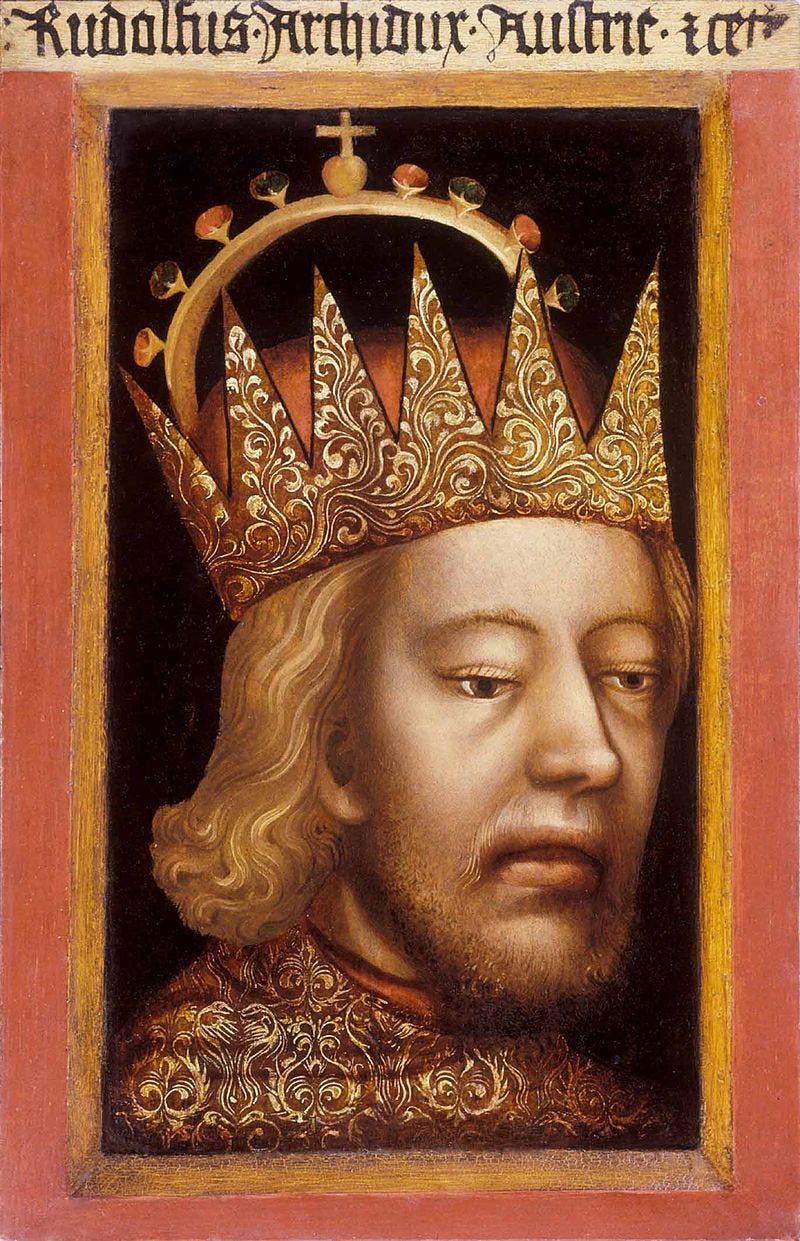
In the late Middle Ages, the dynasty split into two branches: the Albertinian and the Leopoldian lines. The Albertinian line was founded by Duke Albert III of Austria, who divided the Habsburg hereditary lands with his brother Leopold III in the 1379 Treaty of Neuberg, following the death of their elder brother Rudolf IV. Notably, contemporary portraits of Rudolf IV suggest that he already displayed the pronounced jaw associated with the condition.
The Albertinian branch came to an end in the male line with the early death of Ladislaus the Posthumous in 1457. Skeletal analysis of his elder sister, Elisabeth of Austria—Queen consort of Poland from 1454—indicates that she also exhibited prognathism, suggesting that the trait was already present in this branch of the dynasty.
It is often claimed that prognathism entered the Leopoldian branch through Cymburgis of Masovia, who married Ernest the Iron, Duke of Austria. However, this assertion lacks firm evidence. Ernest and Cymburgis had several children, the eldest of whom, Frederick III, became the first Habsburg Holy Roman Emperor in 1452.
Frederick’s only surviving son, Maximilian I, inherited the condition in severe form and passed it to his daughter, Margaret of Austria. Although Margaret married three times, she left no surviving children to continue her line.
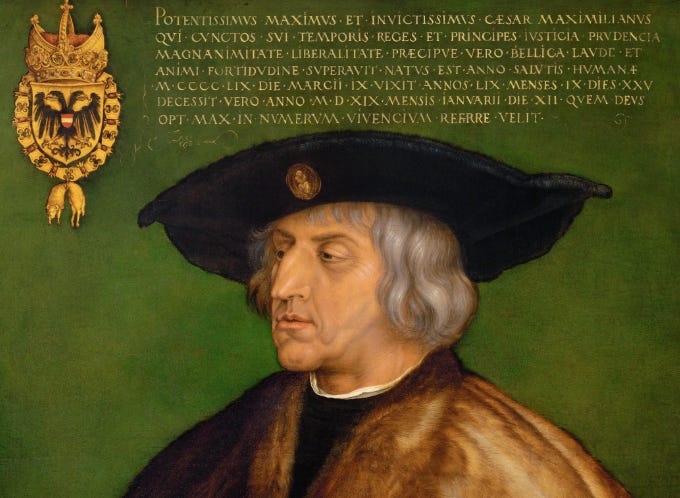
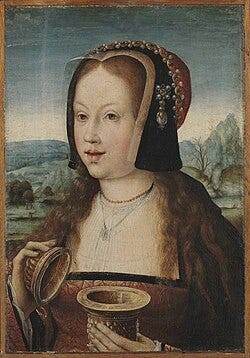
Maximilian’s only son, Philip the Handsome, married Joanna of Castile and had six children with her: Eleanor, Charles, Isabella, Ferdinand, Mary and Catherine. They would become kings and queens - Eleanor became Queen consort of Portugal and France; Charles became King of Spain and Holy Roman Emperor; Isabella became Queen consort of Denmark, Ferdinand became King of the Romans and Holy Roman Emperor, Mary became Queen consort of Hungary and Regent of the Netherlands; Catherine became Queen consort of Portugal.
All of Philip the Handsome’s children, except Catherine, inherited prognathism as is clear from many of their portraits.
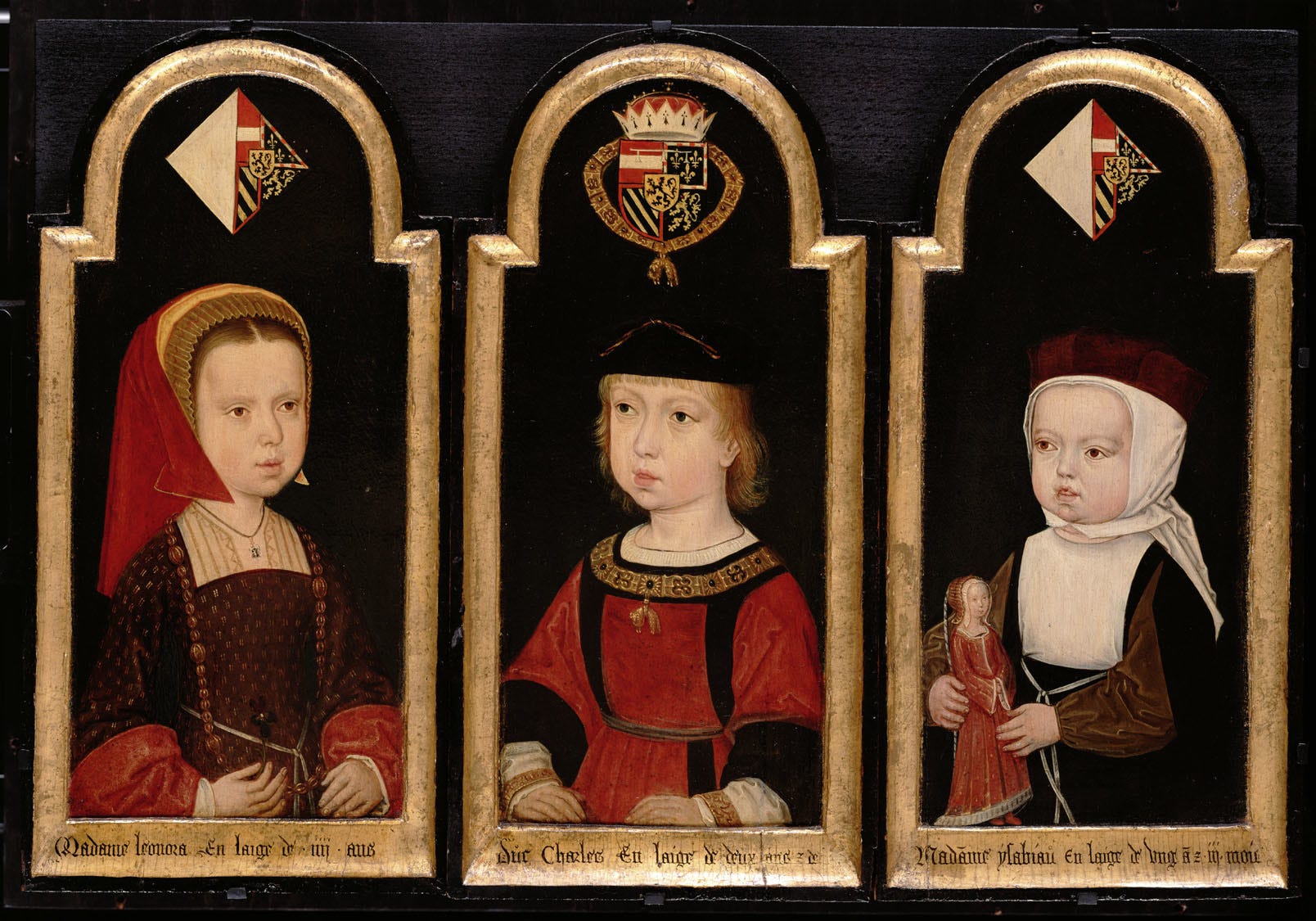
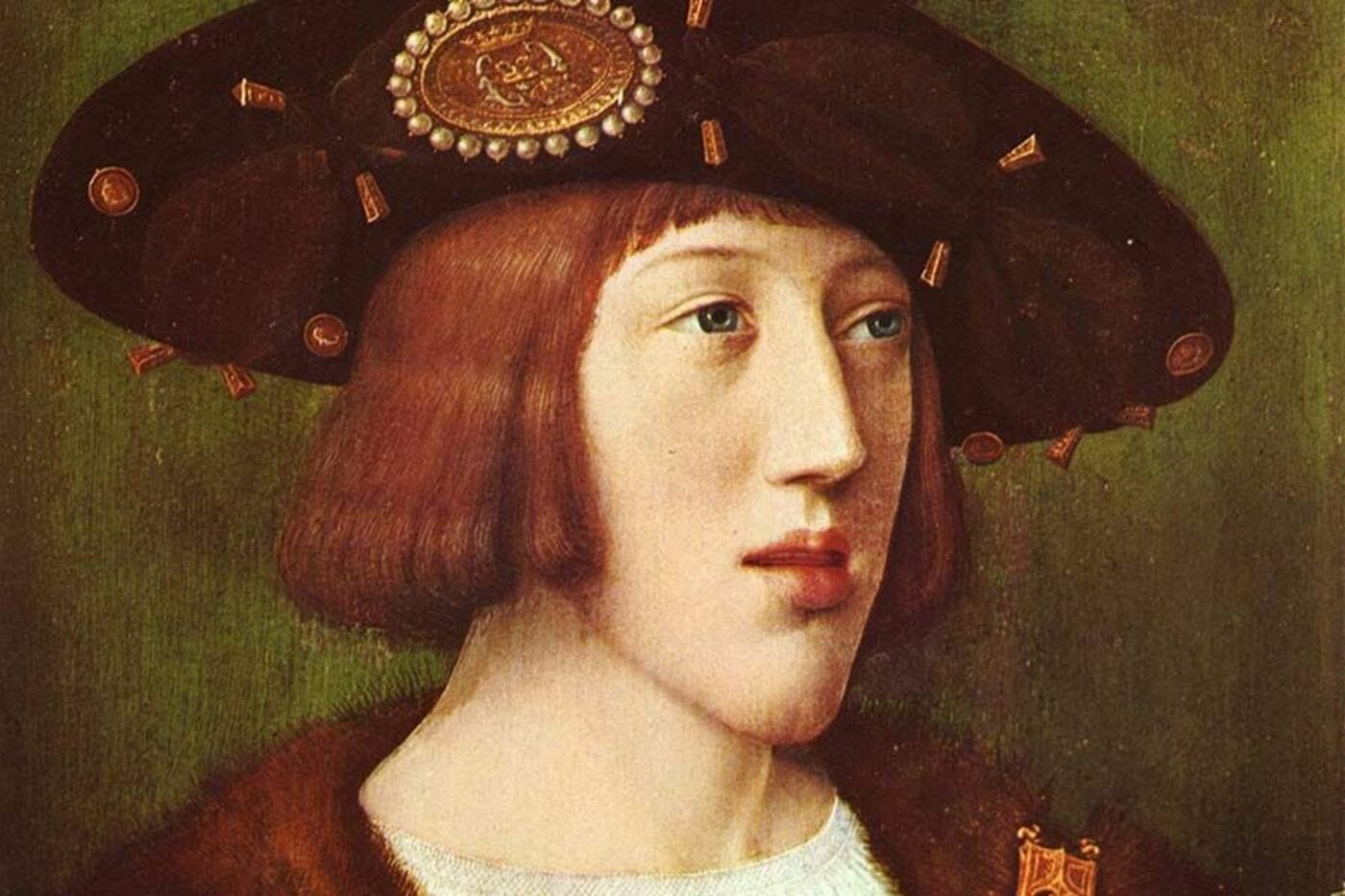
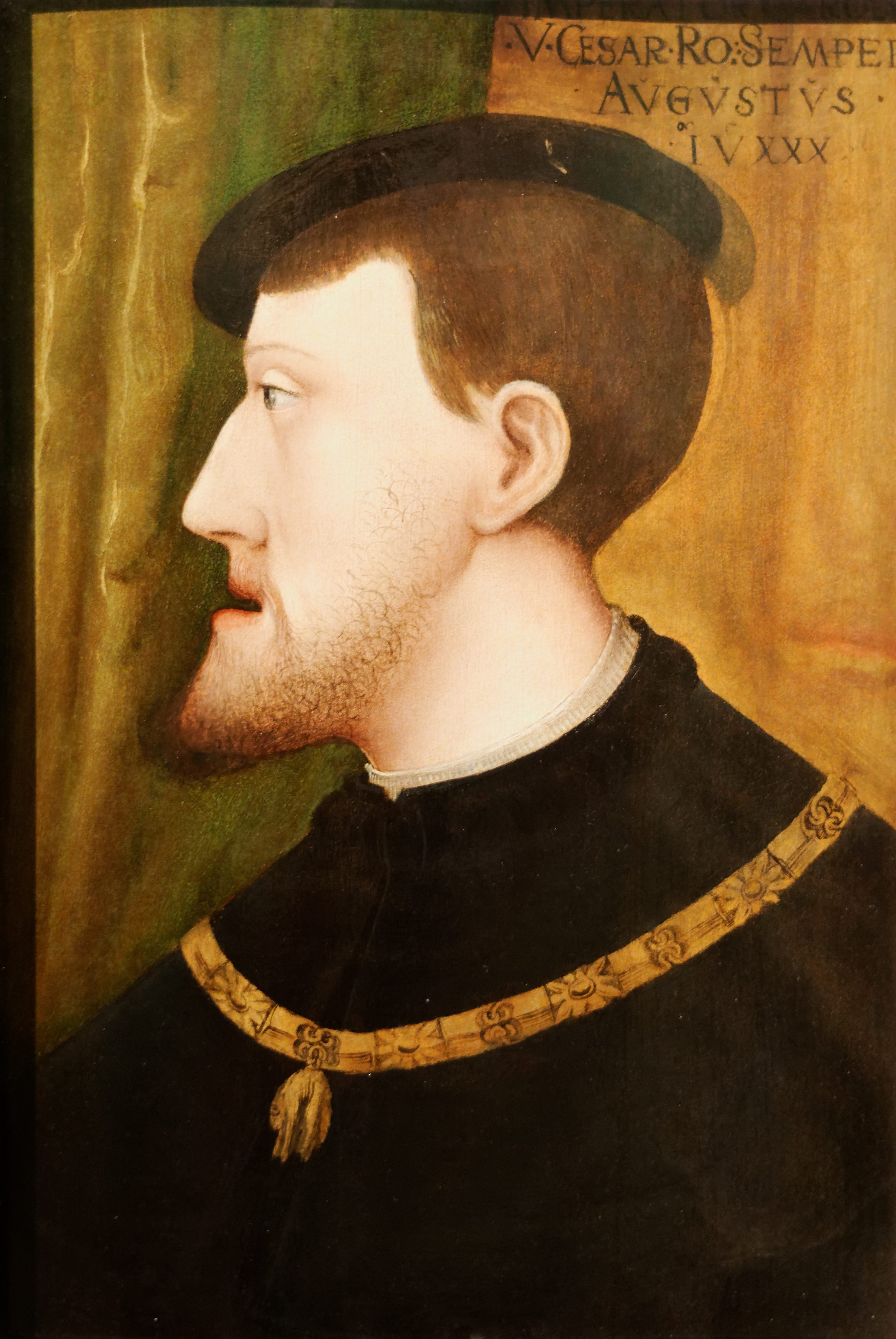
Charles V, Holy Roman Emperor, the most famous sixteenth-century sufferer from this condition, could not close his mouth properly and had problems with breathing and eating. One of the contemporary observers recalled: “His mouth, because his upper jaw was so badly aligned with the lower that his teeth never met. This had two unfortunate consequences: it made his speech hard to follow because he ate his words; and it made eating hard work for him, because his teeth could not chew what he ate, which meant poor digestion and often illness.” In order to conceal his prominent lower jaw, Charles started wearing a beard. When the Emperor’s mummified remains were displayed in the 1870s, the protrusion of the lower jaw was clearly visible.
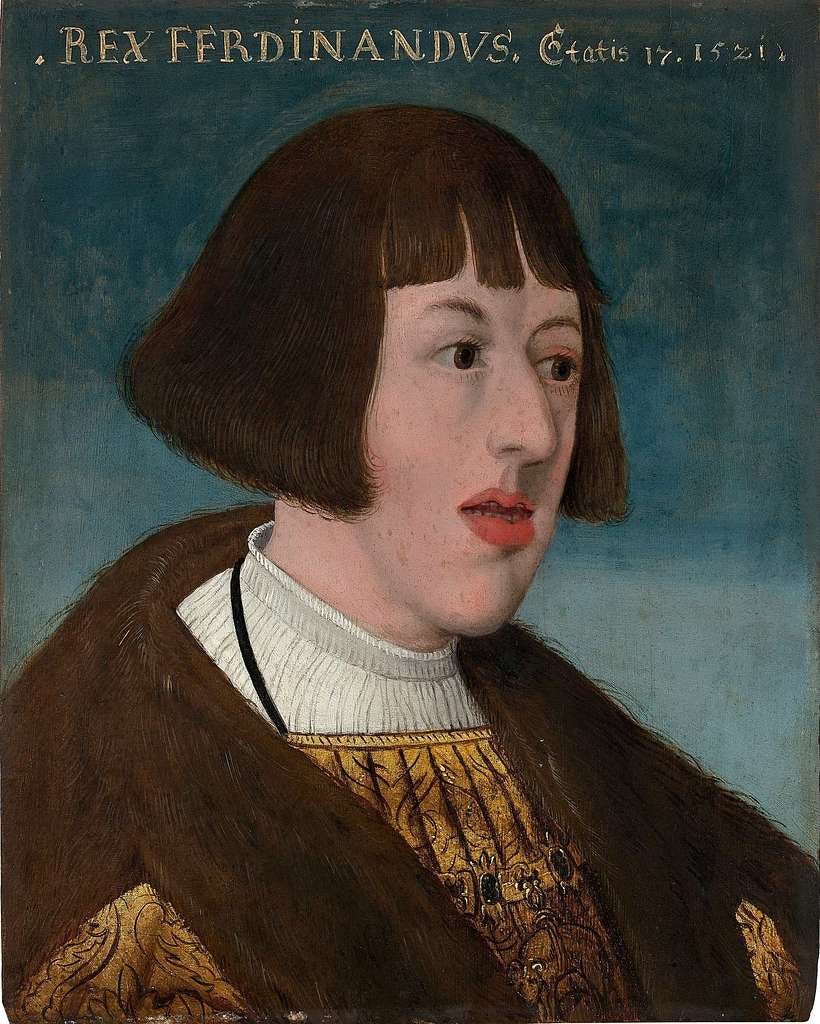
Charles V’s younger brother Ferdinand, who became Holy Roman Emperor following Charles’s abdication in 1558, also suffered from a severe case of prognathism. Several portraits and medals show Ferdinand with a prominent lower jaw, half-opened mouth and large nose. Prognathism was inherited in his line of the Habsburg dynasty.

Prognathism was not the only health problem that resulted from the Spanish Hapsburg’s inbreeding. Reduced fertility, mental instability and general weakness were the results of the so called “inbreeding coefficient” and ultimately contributed to their downfall. Joanna of Castile, known as Joanna the Mad, spent most of her adult life confined to the walls of monastery at Tordesillas. What exactly caused her mental illness is unknown but she probably inherited propensity towards mental instability from her grandmother Isabella of Portugal. Joanna’s grandson, Don Carlos, was another member of the Habsburg dynasty whose mental instability was notorious.
Charles V’s son, Philip II of Spain, sired fifteen children in total (he was married four times) but only four of them lived to reach adulthood and only two had children of their own. The last Spanish Habsburg king, Charles II, is chiefly remembered for his physical disabilities and the War of the Spanish Succession that followed his death without heirs. He is immortalised in history as El Hechizado (the Bewitched) because it was believed that his mental and physical incapacity were caused by witchcraft. The mandible of Charles II was so misshapen that he could barely speak or chew, and thus he had to swallow his food whole, which often caused indigestion and vomiting spells.
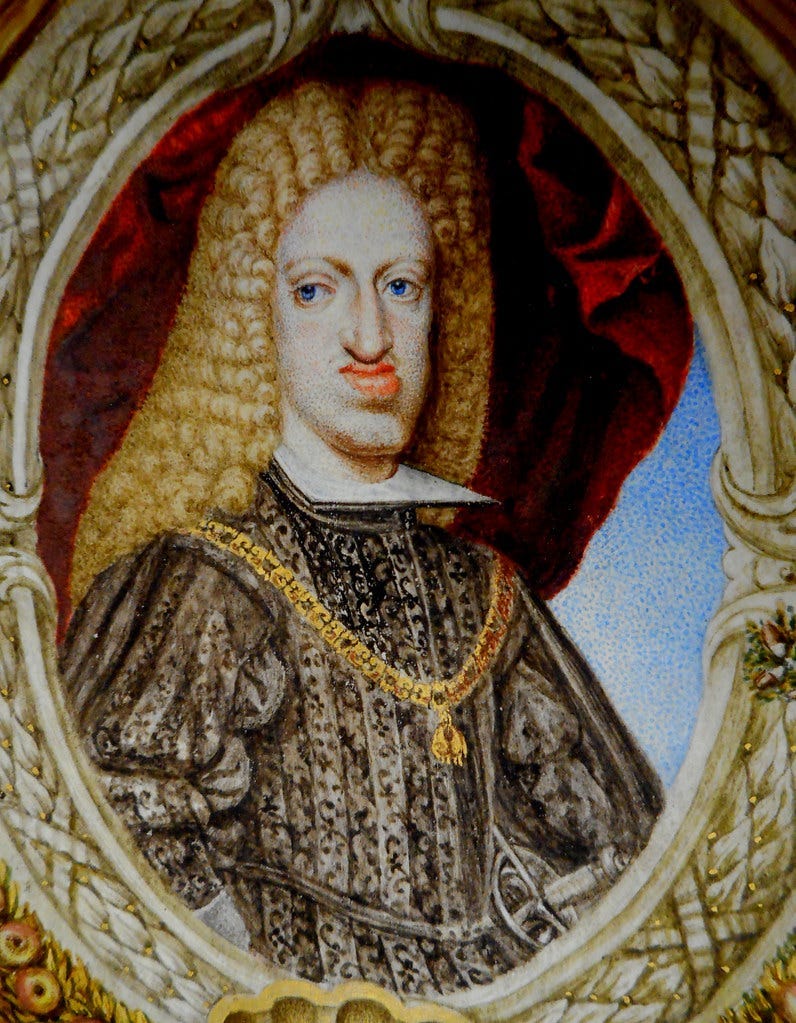
Over the years historians speculated about the causes of Charles II’s death. Conditions such as pituitary hormone deficiency and distal renal tubular acidosis, Klinefelter syndrome, fragile X syndrome or male XX hermaphroditism associated with a fragile X syndrome have been proposed. A recent theory suggests that the symptoms such as macrocephaly, late growth and mental development, as well as the frequent episodes of vomiting and epilepsy were related to hydrocephalus. Hydrocephalus is a neurological disorder caused by an abnormal buildup of cerebrospinal fluid in the ventricles (cavities) deep within the brain. Charles’s post mortem examination seems to confirm this recent diagnosis; “his corpse did not contain a single drop of blood; his heart was the size of peppercorn; his lungs corroded; his intestines rotten and gangrenous; he had a single testicle, black as coal, and his head was full of water.”
In the Prado museum in Madrid it is easy to pick out the Hapsburg portraits, even of the children,
Studied Charles V and Phillip II at A Level but we didn’t do enough on the Hapsburg jaw! This was fascinating, thanks!